Why we give to Puente: Silicon Valley Community Foundation

Manuel Santamaria

Manuel Santamaria first visited Puente in 1999

Manuel Santamaria visited Puente de la Costa Sur for the first time in 1999. He had just joined the Peninsula Community Foundation, one of two organizations that later merged to form Silicon Valley Community Foundation. He was there to learn more about this new organization from its founder, Rev. Wendy Taylor.

He wasn’t expecting what he found: “third world” conditions for field workers who had inadequate housing, poor sanitation, and no health care safety net. Many Mexican-American families in the area suffered similar deprivations.

“There was no formal infrastructure there to help people,” says Santamaria, now Director of Grantmaking with Silicon Valley Community Foundation. “Folks didn’t have access to many of the health and human services offered ‘over the hill’ not to mention adult education, like night classes if they were trying to learn English. The men worked in the fields, the women stayed home, and the kids went to school.”

As part of its grantmaking strategy to facilitate immigrant integration, Silicon Valley Community Foundation supports community groups whose emphasis is on opportunity and equality. Santamaria, like Rev. Taylor, saw an important opportunity in Pescadero. That year, the community foundation gave Puente its first major seed grant to establish a strategic plan and an operating budget.

This year, Puente celebrates 15 years of serving as the South Coast’s community resource center. Puente has evolved into a crucial service hub with a $1.7 million budget and a regional reach that extends far beyond Pescadero to La Honda, Loma Mar and San Gregorio.

It would be hard to imagine that reality without the steadfast support of Silicon Valley Community Foundation, says Puente Executive Director Kerry Lobel. “They’ve supported us every step of the way,” she says. “Puente was a tiny footbridge before, and now it’s an enormous span. SVCF provided the bricks and mortar on both sides of that bridge.”

Lobel also likens SVCF to a godparent that has stepped in to support and guide Puente during some of its most important milestones. SVCF gave Puente its first flexible ‘safety net’ funding. The community foundation supported an early medical program that helped Puente enroll uninsured adults, and the first mobile health van in Pescadero. It funded one of the first local pre-kindergarten programs. SVCF helped underwrite the costs of Puente’s merger with North Street Community Services in 2007, a move that gave Puente the tools to survive the recession.

The Peninsula Community Foundation (one of SVCF’s parent organizations, along with Community Foundation Silicon Valley) even predated Puente as a primary stakeholder in the development of services on the South Coast. The South Coast Collaborative, a working group of residents, organizations and human service providers, benefited from the support of the Peninsula Community Foundation as early as 1997.

Santamaria estimates that since 2004, Puente (and the South Coast Collaborative) have received more than $1.3 million in grant funds from the community foundation and its donors.

In 2012, Silicon Valley Community Foundation and its donors supported Puente’s programs and services with funds totaling $158,000. Funds from SVCF currently support Puente’s adult education program; a benefits analyst position to help locals enroll in the Cal Fresh (food stamps) discount program; and health care services for local youth. When a large fire displaced several Mexican-American families earlier this year, SVCF donors rallied to help them pay their rent and buy clothes. They even got one student a new computer. Starting next year, Puente will have to look elsewhere for safety net support. But SVCF may support Puente’s expanded immigration and legal services, according to Santamaria.

It’s rare for a nonprofit to benefit from the kind of opportunities SVCF has given Puente, according to Lobel. The community foundation has challenged Puente to build its own capacity during difficult times, but has also supported the organization as it has grown and matured.

“I think we have grown, just as they have grown,” says Lobel. “There’s a feeling they’re in it with Puente for the long haul.”

To donate to Puente, visit https://rally.org/puente. To learn more about volunteering with Puente, contact Abby Mohaupt at amohaupt@mypuente.org or (650) 879-1691.

 

Offering a wider range of legal services

Blue cards. Green cards. Congress has not yet passed a comprehensive immigration reform bill, yet Puente has already received plenty of questions from undocumented residents on the South Coast. Many have lived here for decades and are raising children here, sons and daughters who were born in America. They all want legal papers and legitimacy. They want to know how to prepare.

“’Start saving money. Attend English classes. Gather your tax returns.’ That’s what I tell them,” says Puente Program Director Rita Mancera.

Yessenia Herrera

Yessenia Herrera

If immigration reform occurs this year, Puente expects to see more than a hundred new participants who would need help filing government paperwork.

Fortunately, Puente will be ready to help them. Puente is seeking accreditation from the Board of Immigration Appeals to apply to the government on behalf of users seeking citizenship, not just help people fill out a form. Puente will also be able to represent individuals in immigration court proceedings overseen by the Department of Justice.

The Grove Foundation, the primary funder of Puente’s immigration paperwork services, supported the changes. Puente’s new status will give the organization a whole new level of credibility in the community, says Mancera.

“It’s going to be clear to everyone that they can get services from the people that they trust,” she says. “They know we do things in a very honest way.”

Valentin Lopez

Valentin Lopez

Locally in Pescadero, the most popular component of the Senate immigration bill is the Blue Card program, under which longtime agricultural workers would have the opportunity to get legal status if they pass a background check and pay a fine. Eventually, an agricultural worker could apply for a green card. The proposal has broad support from farmers and ranchers.

Puente is already in talks with sister organizations about the best way to anticipate what may be coming next. Eventually, Mancera predicts that Puente would also need to expand its citizenship-tutoring program. Instead of one-on-one, Puente would probably hold citizenship classes and tie them into Puente’s adult English language program.

How low-income applicants would be able to afford the government application fees – thousands of dollars – remains a big question.

Lobel says federal changes are way overdue. Puente has already seen how DACA (President Obama’s deferred action program) has changed the lives of 18 young people who now have legal papers that allow them to work, study, and get a driver’s license. She’s hoping new legislation would give their siblings and parents a similar opportunity.

“People know that it’s a long path – the question is having a path. Right now we’re on a long path to nowhere,” says Lobel.


New mobile medical clinic will resuscitate health care on the South Coast

The South Coast will no longer be a “doctor-free” zone thanks to a milestone initiative to bring wraparound primary health care services to the area: a mobile health care van dedicated to serving those who need it most.

untitled

San Mateo County voters pass Measure A which clears way for funding for South Coast medical services.

The mobile clinic, a co-initiative of Puente and San Mateo County Health System, will serve roughly 3,000 adults in Pescadero, La Honda, Loma Mar and San Gregorio who have literally been without access to primary care since 2009.

A $1 million, two-year grant funded by Measure A, a county sales tax that passed in November 2012, will finance the clinic in its initial phase. It will pay for a van, along with medical equipment and a Spanish/English bilingual staff of four, including the part-time services of a physician, a nurse, a patient services assistant and a community outreach worker/driver.

“It’s like a doctor on wheels.  It’s expected that people will go for every aspect of heath care problems, like asthma and hypertension and diabetes,” explains Puente Executive Director Kerry Lobel.

In contrast to San Mateo County’s urban residents, locals here very often lack even the means of transportation to get to a physician in San Mateo or Redwood City, let alone time to make it to follow up appointments or pick up medications. Some people work in fields or plant nurseries from dawn to dusk. Others already suffer from chronic health problems or are on public assistance, and don’t have the wherewithal to help themselves.

The clinic will begin serving all these populations starting in 2014. It’s a major victory for Lobel, who has been lobbying county officials for a consistent, reliable health care solution ever since the county cut funding for a different mobile health van in 2009.

Both mobile medical vans follow a history of attempts to provide health care services to the South Coast, dating back to 2002. Previous iterations have also included a part-time clinic, funded by foundation grants, inside a space provided by the La Honda-Pescadero Unified School District. Half Moon Bay’s Coastside Family Medical Center also opened a Pescadero satellite clinic for a time.

San Mateo County Supervisor Don Horsley has been steadfast in his support of Puente’s vision for a community health solution on the South Coast. To get the funding approved, he had to convince some colleagues that the mobile health clinic was the right answer.

Supervisor Horsley at annual Puente backpack collection event.

Supervisor Horsley at annual Puente backpack collection event.

“People say, ‘We’ve tried this before and it’s never worked.’ But I think we have a much higher chance of success this time,” Horsley says.

This new model differs from the previous mobile clinic in several important ways. This time, residents will be served by a personal primary care physician who will be able to treat medical problems and see them every week, rather than referring them to someone else. Secondly, Puente will fund health promoters who will personally visit people’s homes and housing sites to learn about people’s health histories and help them feel comfortable about seeing the new doctor in town. That will boost participation, which has been a stumbling block in the past.

“The only way it won’t be successful is if we can’t get enough people to go,” says Lobel.

Lastly, the program will be supplemented by Stanford University physicians who are keen to serve a rural population. Stanford Professor Dr. Gabe Garcia will oversee their staffing and training. Dr. Garcia has a longstanding interest in rural health care and has been working with Puente and lobbying the county for a mobile health clinic for many months.

“I believe access to health care is a big part of creating good community,” says Dr. Garcia. “The ideal system would be not only health care, but also preventative care and education.”

Under Dr. Garcia’s guidance, Puente will use the mobile clinic staff to institute a holistic medical prevention model that not only keeps people healthy, but considers aspects of their lifestyle that may be harming them.

For instance, studies have shown that rural residents are more likely to smoke, less likely to exercise and eat healthily, and are typically more obese than their urban counterparts.

Farm workers in particular are at higher risk of chronic diseases like high cholesterol and hypertension, as compared with the general population.

In addition to the prevalence of on-the-job injuries and rashes, farm workers struggle with depression. They are also more susceptible to certain cancers, like prostate cancer, leukemia and stomach cancer, than the general population.

At the same time, farm workers may be less likely to seek medical care because of cultural stigmas or because they speak an indigenous language and won’t be understood.

From now on, Puente’s approach to health care will be what Dr. Garcia calls “looking upstream.”

“If there’s problems with access to food, regular exercise, safe housing, access to medicine — that’s part of the total package,” he says. “Many farmers don’t eat the healthy foods they produce. They can’t choose the right foods that lead to weight loss and better control of blood sugar.”

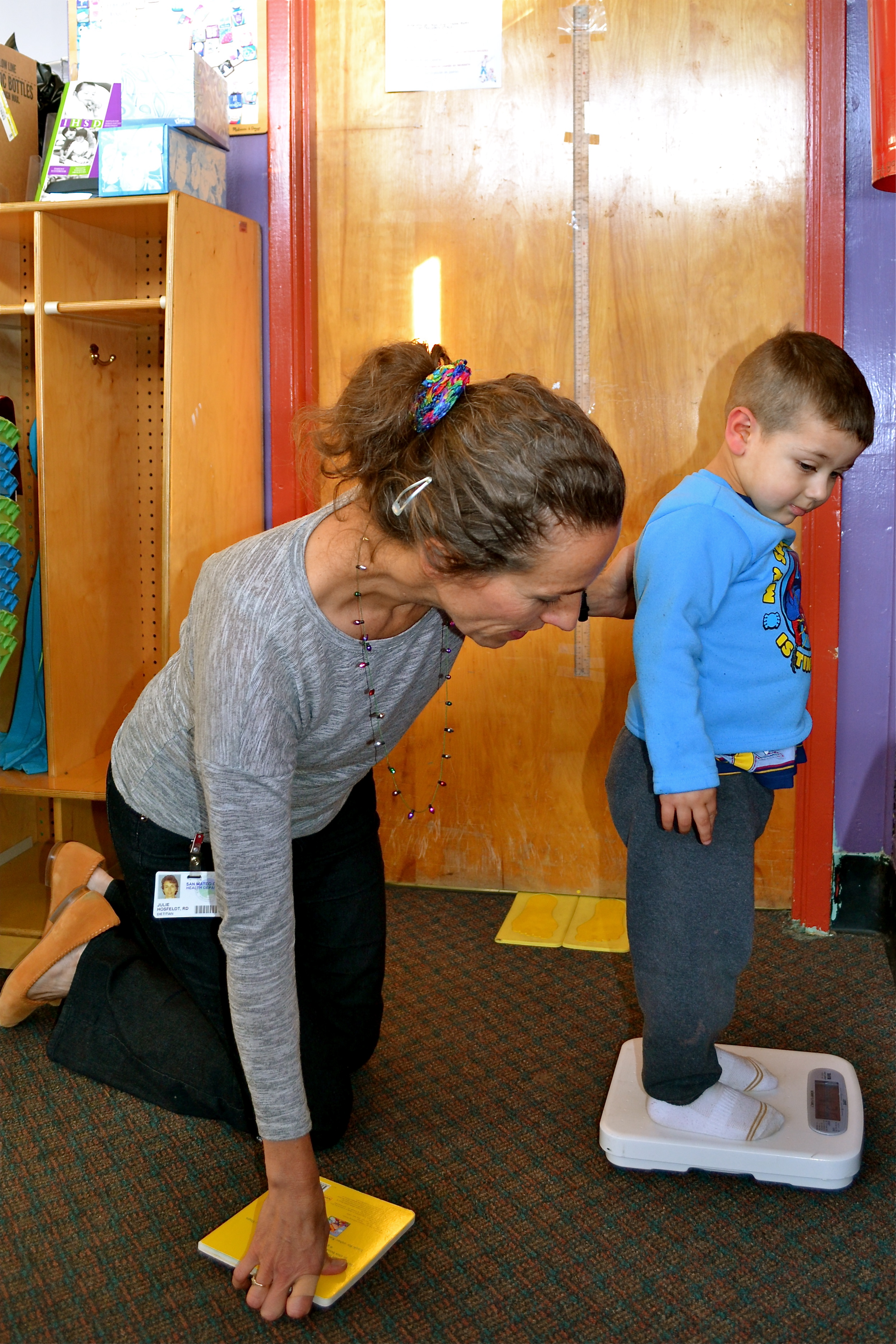
WICJulie-Hosfeldt2

Julie Hosfeldt comes twice each month, courtesy of the Women, Infant, and Children Nutrition Program.

Puente devotes considerable resources to keeping South Coast residents healthy, from Zumba classes to community discounts for healthy produce at the Pescadero Grown! Farmer’s Market.

The ultimate goal is to build a bricks-and-mortar health clinic in Pescadero, according to Lobel – something permanent, so locals know they’ll never have to face a medical problem alone ever again.

“If we’re going to function as a community, we need to have this very basic service,” says Lobel.

To donate to Puente, visit https://rally.org/puente. To learn more about health care at Puente, contact Kerry Lobel at klobel@mypuente.org or (650) 879-1691.