From farm worker to board member: Gabriel’s story

gabriel

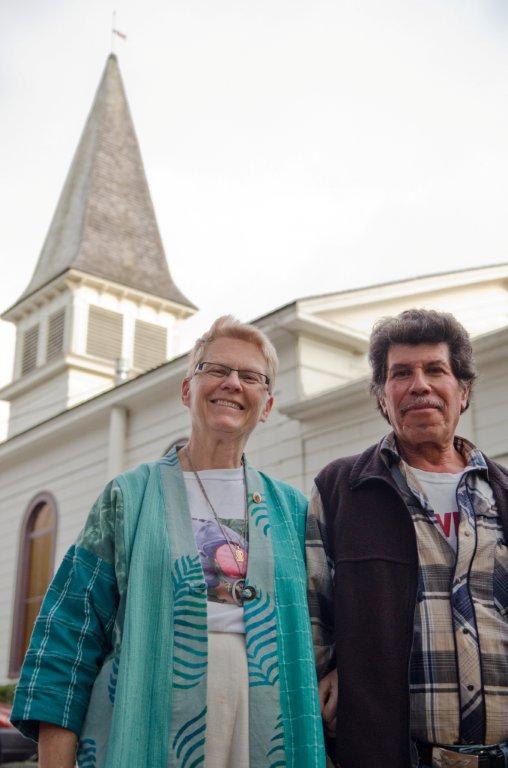
To understand Puente’s heart, you must first meet Gabriel Echeverria. He was the first local nursery worker the Rev. Wendy Taylor befriended. He helped Rev. Taylor connect with other male farm workers in the community, and in so doing, was the first to personify the “bridge” between Anglos and Mexicans that Puente was intended to create. And later on, when Puente inaugurated its Board of Directors, Echeverria was the very first sitting board member. (He is still on the board).

It all began one day in 1997. Rev. Taylor, the new part-time pastor of Pescadero Community Church, was sitting on the steps of the church when she saw Echeverria ride by on his bicycle. She called out to him in perfect Spanish, and he was so surprised that he nearly fell off his bike.

“She said. Stop! Hello! She asked what my name was. She said, ‘I’m Wendy – it’s really nice to meet you,’” recalls Echeverria. “She said, ‘I’m going to be sitting here for a while. I hope to see you again soon.’”
LaSala-4x6-23

Rev. Taylor was as good as her word. She was on the steps the following day, and the day after that. Eventually, she asked Echeverria if he would help her meet other Mexican field and nursery workers in Pescadero.

So he spread the word that there was a lady pastor in the area. He laughs when he recalls that had to work to convince people that Rev. Taylor, a blond-haired gringa, really did speak perfect Spanish.

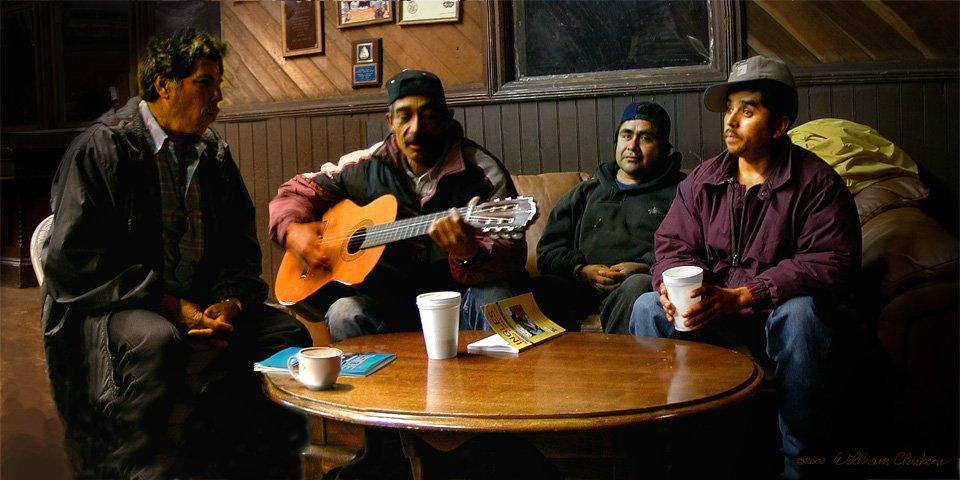
That is when Puente changed Echeverria’s life. Rev. Taylor founded Puente Ministry in 1998, with Echeverria a firm ally. He helped build the bike program; he distributed food and clothing to workers who were hard to locate; and he helped set the tone at La Sala, where he still plays guitar and sings with Miguel, a local friend.

“She brought music into my life. I asked for a guitar and she found me one,” he says.
lasala_musicians_ver21

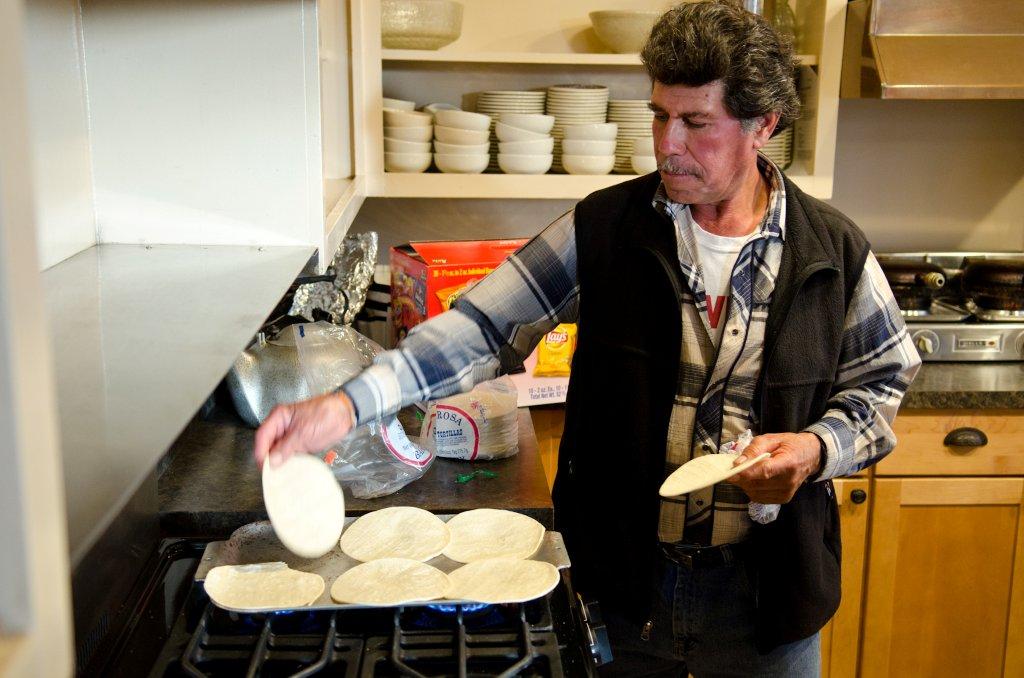
At the same time, Echeverria, an ebullient and gregarious 67-year-old with a quick smile and worn leather cowboy boots, helped set Puente’s tone on the Board of Directors. He takes attendance at La Sala twice a week; a job that he jokes makes him feel “important.” He also keeps an inventory of supplies.

Today, Echeverria is well on his way to earning his elementary school certificate through Plaza Comunitaria, a program Puente offers in concert with the National Institute for Adult Education in Mexico. He has been studying for four years with a tutor at Puente, and he has gained basic Spanish literacy skills.

“For me it’s about being able to speak. It’s empowering,” he says.

Echeverria remembers a time, not so long ago, where he was afraid to talk to anyone in town.

“Before Wendy I didn’t speak to people. It was just go to work, go home,” he says.

Now he speaks with authority. Now more than ever, he is Puente’s bridge to the community.
 

Puente’s future depends on you. Donate now!

Puente: the next 15 years

One day in 2007, Puente Executive Director Kerry Lobel invited Puente staff and volunteers to her home for a communal brainstorming session. Puente had just merged with North Street Community Services under Lobel’s leadership.

After she seated everyone in her living room, Lobel asked people what Puente’s future ought to look like. What services should it provide? What would it stand for? How would it bring people together?

By the time they were done, the group had filled several walls with notes. They had the seeds for Puente’s next phase.

Those seeds have blossomed into an organization that serves more than 1,500 South Coast residents each year. Today, everyone knows that Puente is the only place to go for everything from ESL and medical insurance, to taxes and substance abuse prevention. Puente touches the lives of families who need rental assistance, helps women with maternal depression, and partners with the YMCA to hold a summer camp for kids who would never be able to afford it.

“We like to say we’re a one-stop shop,” says Lobel.

This year, as Puente celebrates its 15th anniversary, Lobel is taking the opportunity to look ahead to the next 15 years.

Screen shot 2013-04-14 at 5.27.43 PM

Feeding the community

The South Coast’s farming future may belong to small artisanal farms as global competition drives larger farms and nurseries out of production. Keeping local farms in business (and farm workers employed) has become a core tenet of Puente’s commitment to a thriving local economy.

In 2011, Puente launched Pescadero Grown! Farmer’s Markets to connect South Coast farmers with local shoppers – including several discount programs for low-income families, who normally wouldn’t be able to afford local produce.

And Puente has brokered discussions between farmers eager to reach a wider Bay Area audience and outlets that can help them get there.

“A lot of things we’re doing now are things we wouldn’t have imagined doing five years ago, let alone ten. The farmer’s market is a good example,” says Lobel.

Ultimately, Lobel would like to see food take on a prominent role within area schools, by integrating Puente’s Edible After School Program into middle and high school curriculums. And in a shrinking market, the South Coast can use new distribution models to strengthen its cachet as a provider of freshly-grown, nutritious local food.

WICJulie Hosfeldt1

Health care for all

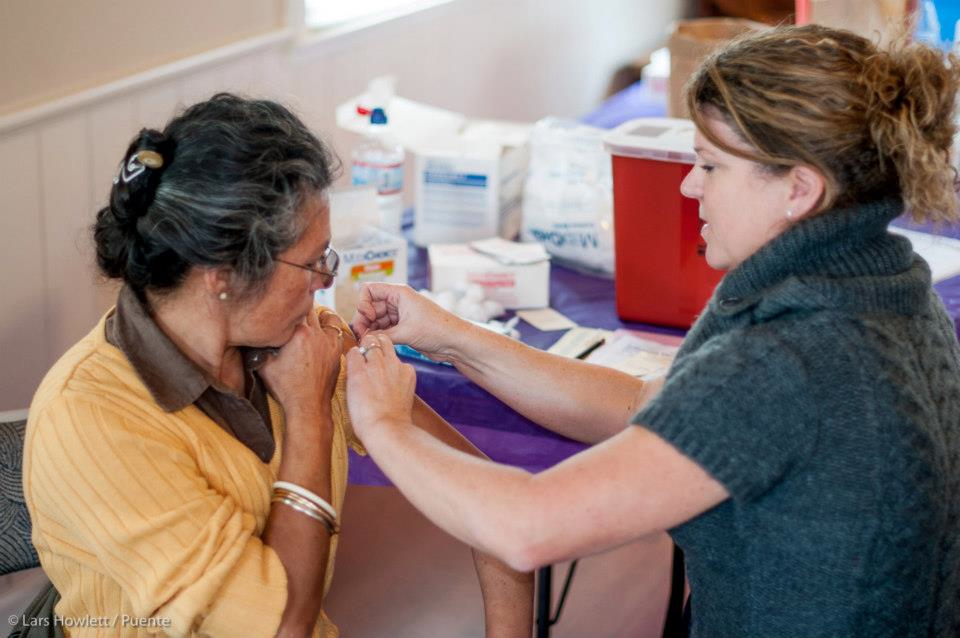
Lobel calls access to health care “a fundamental human right.” It is a right that many locals lack at present, since the South Coast has no medical care. Without a car, many families do not have the means to travel to a doctor or dentist in Half Moon Bay or even farther away, to hospitals in Redwood City.

As a result, Lobel says that people are forced to live with chronic and serious conditions like diabetes – and only seek medical attention when the symptoms are too painful to ignore. By then, it can be too late.

“What we have now are people who may have had their medical or dental care in Mexico and are not getting it at all,” says Lobel. “By the time people feel bad enough to go to a doctor, their lives are changed forever.”

Puente is deeply committed to securing a sustainable system for health care on the South Coast. Lobel is confident that Puente’s continuing conversations with San Mateo County health officials and with Stanford University’s own clinicians will result in some kind of solution.

It could take the form of a mobile health van like the one the county used to provide. Or it could be something radically different. Either way, Lobel said that she’d look for a public-private funding partnership to give the community some lasting results, as opposed to some temporary measures.

“We’ve learned that if the community isn’t controlling the resources, it doesn’t control the outcome. The community needs to decide what happens,” she says.

Screen shot 2013-04-14 at 5.24.38 PM

Literacy, starting at day one

Despite the wealth of studies linking early childhood development programs to a lifetime of scholastic achievement, the South Coast lacks a comprehensive way to boost the success rate of children in poverty. Many of them lack any English skills or access to learning materials and books.

As a result, some children are already playing catch-up in English and math by the time they enter the local school system. Lobel wants to change that, in close collaboration with the La Honda-Pescadero Unified School District.

The school district currently offers a half-day of preschool for children starting at age 3, but Lobel would like to see that program expand to a full day.

“If we’re ever going to see the education outcome we’ve hoped for, we need to start with 0-2 year-olds,” she says. Puente is committed to working with the school district attract funding to launch program for children ages 0-2, she adds.

The ultimate goal is to prepare every Pescadero High School student to go to college when they graduate. More first-generation students are entering college now than ever before, thanks to Puente’s tutoring and scholarship programs.

“You can do a lot with someone who’s 20 years old, but it would be a lot easier if you started from birth,” says Lobel.


Puente’s future depends on you. Donate now!

Why We Give to Puente: Carol Young-Holt and David Sandage

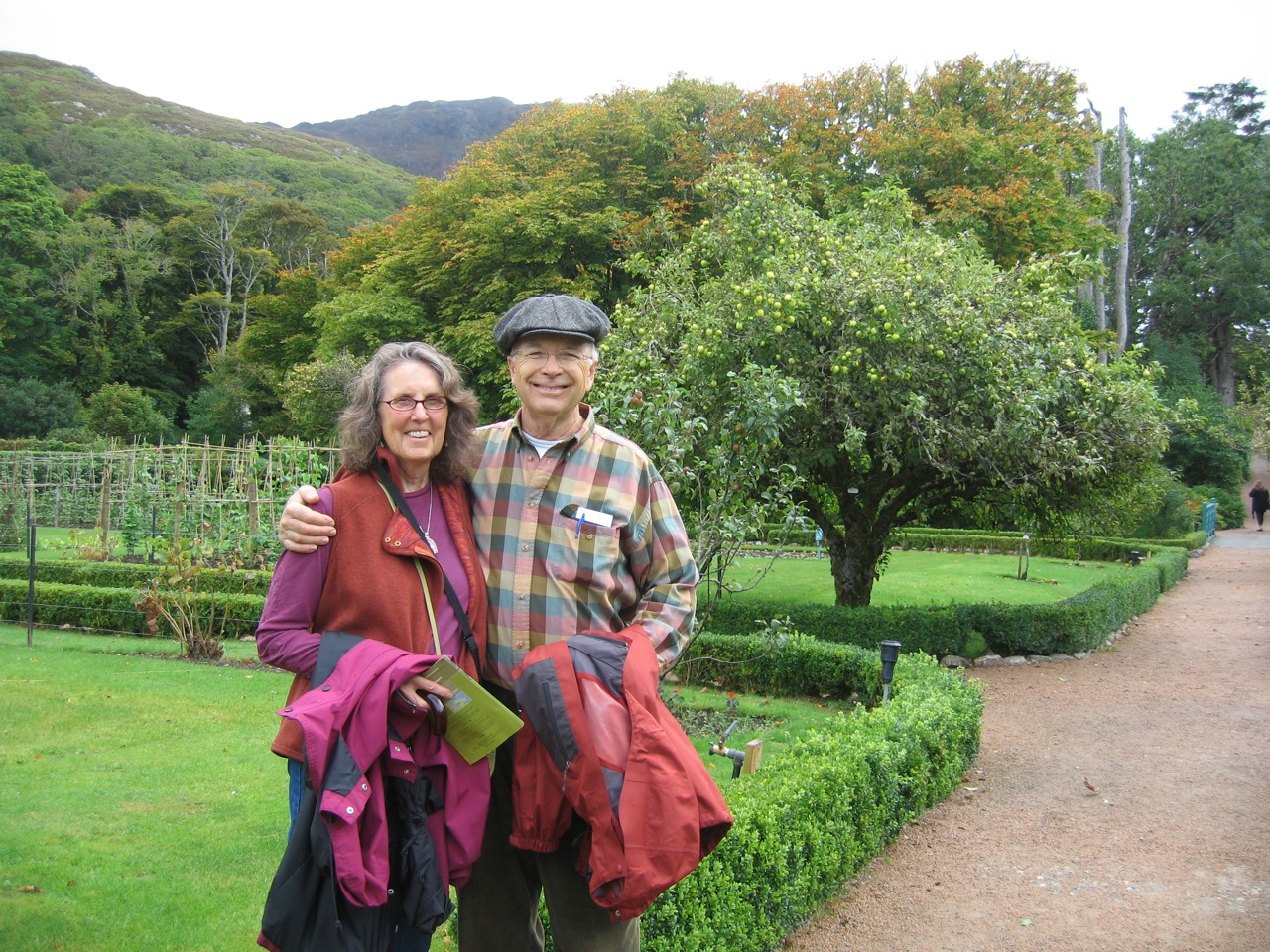
Carol Young-Holt and David Sandage in Ireland

If Rev. Wendy Taylor is the spiritual mother who gave birth to Puente, Carol Young-Holt and David Sandage are its fairy godparents.

The couple moved to La Honda in 1989 without suspecting that they would eventually help form the nucleus of social services on the South Coast. At least until they started volunteering with Puente – and saw how their Mexican neighbors lived.

“I was absolutely appalled by the lack of basic services that I took for granted, coming from Palo Alto – the lack of health care and transportation, among other things,” says Young-Holt.

In 1997, Young-Holt, with her husband’s support, was among a small group of locals who met to figure out how they could solve the most intractable problems on the South Coast. Their goal was to leverage county services and private funds to address the needs of Pescadero’s least fortunate residents. Eventually, the group became known as the South Coast Collaborative.

The newly funded services included mental health for the local schools; safety net services; English Language Learning classes; expanded and new preschool services at Pescadero Elementary and La Honda Elementary Schools; a new south coast transportation system, SamCoast;  and bringing the County’s mobile health van to La Honda. All of these services were provided under the auspices of a spinoff called North Street Community Resource Center, which formally merged with Puente on April 1, 2007.

Today, Sandage and Young-Holt are monthly sustaining Puente donors. Young-Holt is Vice Chair of the Puente Board of Directors. Sandage serves weekly meals at La Sala, where he enjoys chatting in Spanish with the farm workers who come for a hot meal – a role he has played since La Sala began.

“They’re some of the most honorable people I know,” Sandage says. “They work really hard and they’re always careful to consider your feelings.”

Both are longtime parishioners of Pescadero Community Church, the home base of La Sala and the locus of the original Puente Ministry, founded in 1998 by Rev. Wendy Taylor.

Of all the work they’ve done on behalf of South Coast neighbors – the meals they’ve served, the money they’ve raised, the classes they’ve taught – Carol Young-Holt and David Sandage say the most rewarding by far experience has been watching Puente transform people’s lives.

For example, Sandage really values his role as a volunteer mentor in Puente’s citizenship education program, which involves basic English instruction as well as helping people pass their U.S. citizenship test.

“That’s really enjoyable because it’s a one-on-one relationship. You really make a friend.”

Sandage credits Puente’s Zumba dance classes with uniting locals from white and Latino backgrounds in the name of fun and fitness.

“When we first got here that never could have happened, because everybody was afraid to come out of their homes,” he says.

Young-Holt praises Puente’s youth program, which was founded back in 2007, for “giving the kids some real purpose. I’m watching more and more kids go off to college who might not have gone off to college before.”

Because of Young-Holt’s vision, South Coast neighbors contribute funds each year to Puente’s Youth Bridges Awards – scholarships that are provided to each and every youth that has worked at Puente high school years.

As the South Coast continues to change – culturally, economically and demographically – Puente’s ability to adapt and respond to the needs of residents owes much to the powerful support of its original fairy godparents.


Puente’s future depends on you. Donate now!