
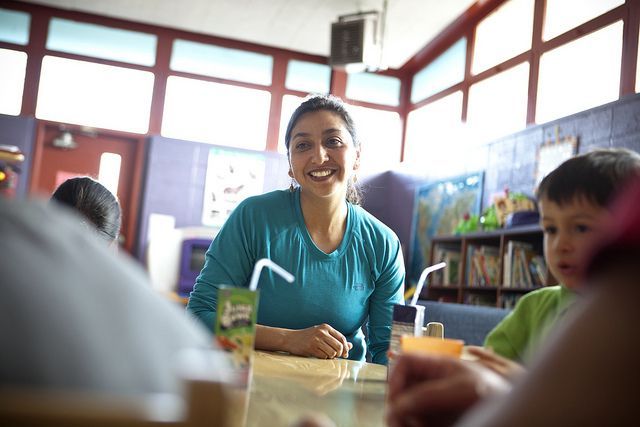
Rita Mancera: Starting Puente’s youth program was “huge”

PFxUGGCLg7EWASlnyIsXZD6A2WLSlnx1q-NIaA_plwE

Program Director Rita Mancera came to Puente in 2006 as a volunteer. She had just moved to the area from Mexico with her American husband. She started working for Puente’s parent involvement program, paying home visits to parents of infants. She was later promoted to the role of Community Builder, then Program Director.

In 2006 we had one of the trailers at Pescadero Middle School and maybe seven people on staff. I really felt like it was a transition job for me – it wasn’t something to last for 7 years.

Then Kerry came on board and I remember that, even at the first meeting where they introduced her, I had a feeling: she has a plan. She has a big plan. That was when I decided to stay longer and see what was coming ahead with the merger.

I was pregnant in 2007 and I needed to take leave. That summer, Kerry had decided to start the youth program. Six local youth joined the program, but I couldn’t have known how huge this would become. Kerry said, “There are all these kids around. Maybe some of them would want to work with us.”

I came back from maternity leave and the youth who had started working with us over the summer were permanently employed!

I look back over the last six years and think about how we have grown along with these young people. It’s like we’re family. We are so close to them. We know their issues. We try to help them; we argue with them too.

People used to view the youth around here with distrust – like, who are these kids wearing black hoodies? The fact was they didn’t talk much to anyone around here, and a lot of people were intimidated by them.

At times, they were challenging and they were defiant. But the basic chance to work with adults – to have a job and earn their own money – that changed everything.

I wish we had pictures to show the transformation in most of them. Sometimes it was in the way they dressed, or the way they cut their hair. Suddenly they had longer conversations with us instead of just saying ‘hey.’

Some of them would have failed high school back then. Now most of our kids go to college, one way or another. Now parents want their kids to come work at Puente and the kids themselves ask – ‘When can I start working at Puente?’

I like to see them cash their checks. I like to see them earn their money, from the ones who buy their computers to the ones who suddenly buy a car. They have something I didn’t have when I was younger.
Joann Watkins: Community mental health is “extraordinarily gratifying”

joann

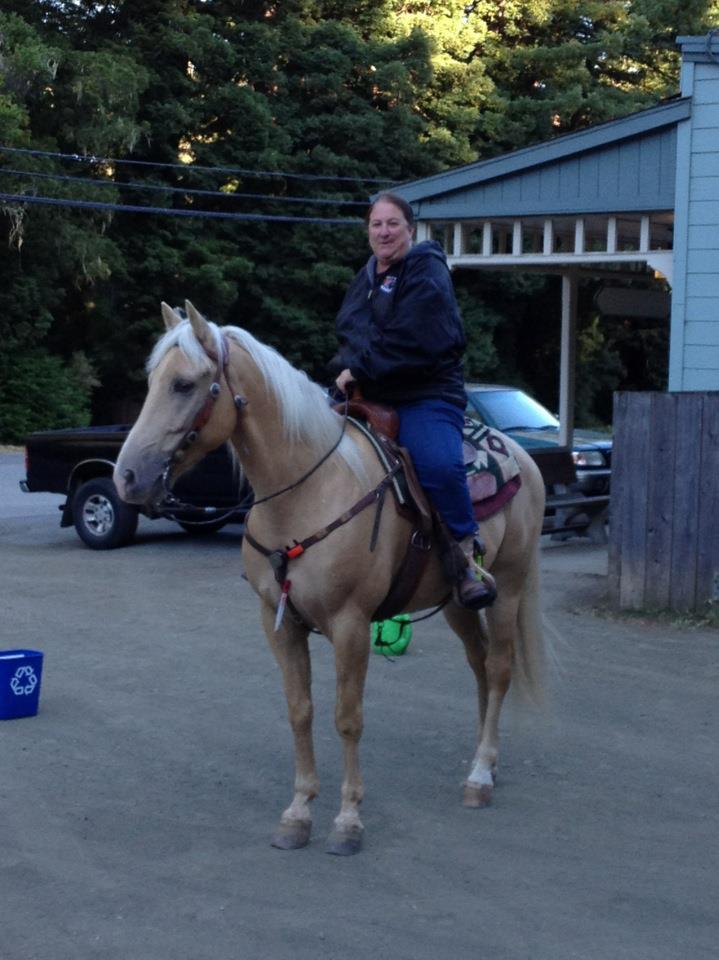
Clinical Director Joann Watkins was a part-time therapist for North Street Community Resource Center when Puente merged with North Street in 2007. Today Puente’s Behavioral Health Services team covers all aspects of health and wellness. Watkins lives in La Honda. She is a licensed marriage and family therapist, was trained at The Mental Research Institute, and is a former adjunct professor at Notre Dame de Namur University.

Community-based mental health is my passion. I struggled early on with how to maintain client confidentiality and live in the community.  I have found that although it is difficult at times, the good far outweighs the negatives. You are able to see systemic change from your efforts within the community.  As an example, it is extraordinarily gratifying to have worked with a child for years, send them off to college and have them come back and report their success.

Today, at Puente we operate as a very cohesive and comprehensive behavioral health clinic. I have an amazing staff and I am extremely proud of the work that we do. When I started at North Street Community Resource Center, I was often the only therapist and would do therapy in the closet, on a park bench or wherever I could find a bit of privacy.  Because of Puente’s efforts we now have a designated space for the therapist and client to meet in privacy.

Our services cover all aspects of behavioral health.  We provide individual, family, and group therapy and have clinicians embedded in each of our school district’s four school campuses.  Our group focus is diverse: we provide drug and alcohol prevention education and awareness, parenting classes, domestic violence prevention, and have specifically targeted maternal depression in the community. Moving forward, I am excited to implement comprehensive child abuse prevention awareness training for all members of the South Coast community.

Kerry Lobel: Discovering Puente was “a dream come true.”

s7AuORMrdfnaw5TyTd_AZWIlvIoz8QkZL5T6prAbV2g

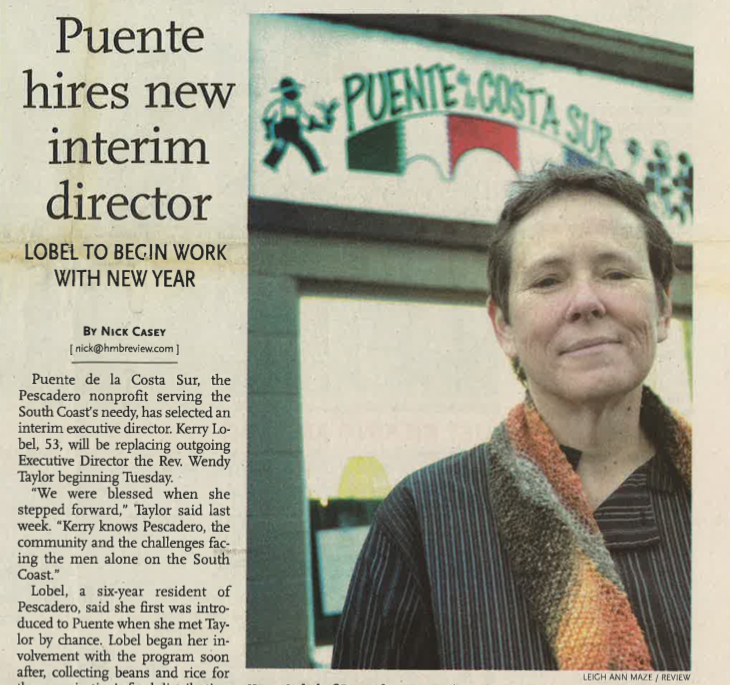
Puente Executive Director Kerry Lobel came to Pescadero 13 years ago for what she thought would be a month’s vacation. Then she got involved with Puente as a volunteer, and one month became two. In 2007, she was asked to preside over the merger of Puente and North Street Community Resource Center, and she became Interim Executive Director of Puente. She was such a perfect fit that she decided to stay. 

I came to Pescadero because I was leaving a job as executive director for a Washington-based LGBT-rights group and needed a rest. I was pretty tired and not really looking to become involved in anything new. But I think you can’t grow up in California, as I did, without being compelled by the stories of farm workers and the farm worker movement. And the South Coast is a powerful and magical place.

I was interested abstractly in what Puente did, but on my first volunteer day I went to help with the food distribution and I was very touched and moved by the people that I met. They were so hardworking and had such powerful stories, and were so grateful for what I considered so little.

I was really struck by the efforts Puente had made to connect people who wouldn’t normally connect with each other. At that point Puente had given Spanish classes to over 200 English speakers. They had really touched a lot of people on the South Coast just at a basic level, so that people could talk with each other.

I just sort of stepped into a situation that could benefit from some skills that I had. Who knew that for me, it would be a dream come true?

The Puente of today is the heir to 15 years of people working together under a vision that this place could be as beautiful inside as it was on the outside. That by working together, we could overcome some of the challenges larger communities face. And I still believe in that.

The world of 15 years ago was a world before 9/11. The borders were much more porous. We had a lot of families that had been here for many years, but also a regular group of mostly men that would go home to Mexico in the winter and return to Pescadero for the farming season.

Following 9/11, the mobility that people had to go home to Mexico and come back to Pescadero went away, literally overnight. People began staying longer in Pescadero as the costs of crossing the border became more expensive and border violence due to drug-trafficking became more dangerous.

As more people stayed, it created the necessity and opportunity to develop long-term programming for people who were here. This is the climate in which we operate: there are people who live in the shadows because they don’t have a path to legal residency. We have farmers who are struggling to make a living and decreasing the hours they can offer to workers because of the globalization of food and flowers. Both communities are looking to sustain our rural way of life.

There is no other organization in our region that does what we do. We are one of a kind. Our isolation creates an opportunity to really consolidate programming and services and make a real one-stop shop here. And we do it with an amazing amount of heart.