
Why we give to Puente: Potrero Nuevo Farm and Blue House Farm

Puente’s commitment to providing fresh, local produce to the people who can least afford it has always been contingent on the cooperation of local farmers and ranchers – passionate food advocates who donate produce or sell it at Puente’s Pescadero Grown! Farmer’s Markets.

And nowhere has that vision found more bedrock support than with Potrero Nuevo Farm and Blue House Farm, two small farms a short drive from Puente’s headquarters in Pescadero.
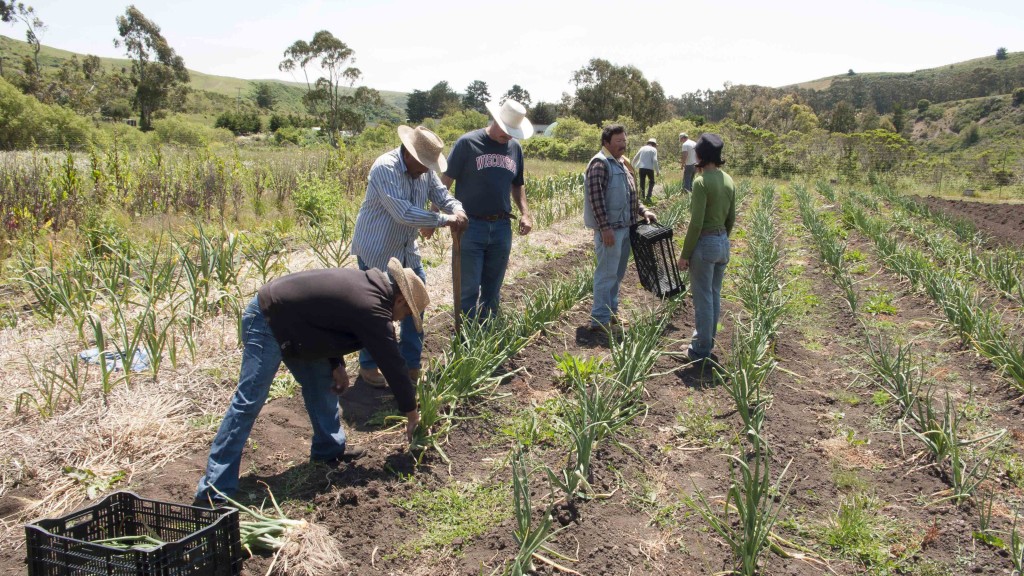
Half Moon Bay Catholic Worker volunteers harvest at Potrero Nuevo Farm

This year, Potrero Nuevo Farm (which means “new pastures”) will donate a staggering 6,000 pounds of fresh-picked farm produce to Puente (and another 6,000 pounds to Catholic Worker House of Half Moon Bay) – food that Puente uses at program events and distributes to individual Program participants.

“They’re basically growing food so that other people can eat healthfully,” says Puente Executive Director Kerry Lobel.
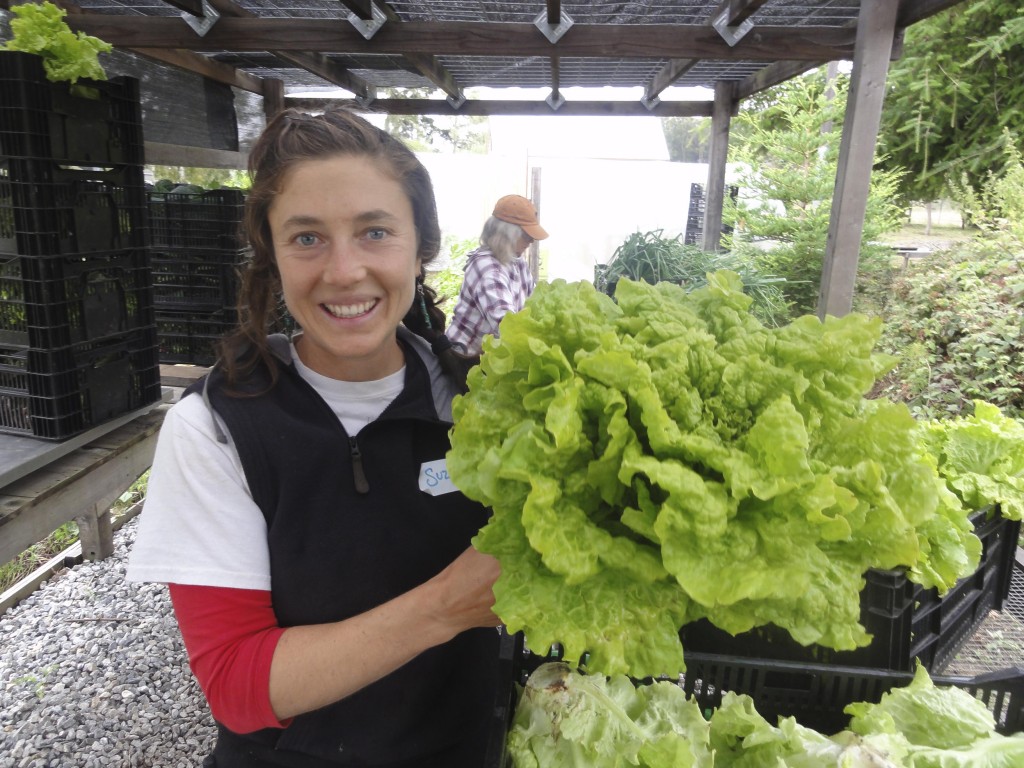
Potrero Nuevo Farmer, Suzie Trexler, holds lettuce

Bay Area philanthropists Bill Laven and Christine Pielenz founded Potrero Nuevo Farm in 2008 in the spirit of the social justice work they’d done together for many years. They wanted to feed struggling South Coast families and educate children about the value of farming. Today, the farm donates 85 percent of the food it grows.

“It’s great to feed people who can’t even afford food from Safeway sometimes,” says Laven.

Founded in 2005, Blue House Farm was at the vanguard of a group of small, organic cultivators who started tilling plots along South Coast at that time. Co-founders Ryan Casey and Ned Conwell heard about Puente’s efforts to locate affordable, nutritious food for local Mexican families – people who could often only afford processed foods, or couldn’t make the trip up to Half Moon Bay for fruit and vegetables.
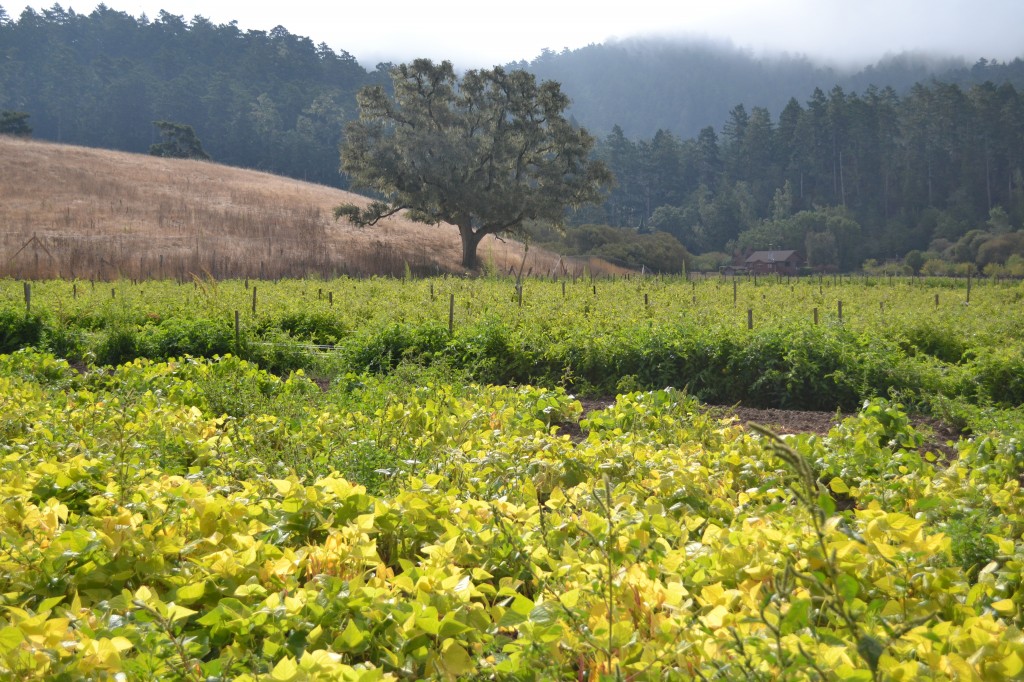
Blue House Farm

Blue House Farm started distributing their weekly CSA boxes (Community-Supported Agriculture – a seasonal selection of produce) to Puente, which gave the boxes to local mothers who had completed a nutrition education course.

“I think giving people in Pescadero some broader food options is an important thing,” says Casey, who now owns Blue House Farm alone and runs it with members of his staff.

Blue House was among the first farms to participate in Pescadero Grown! when the markets were in a germination phase and Casey is one of Puente’s most stalwart supporters.
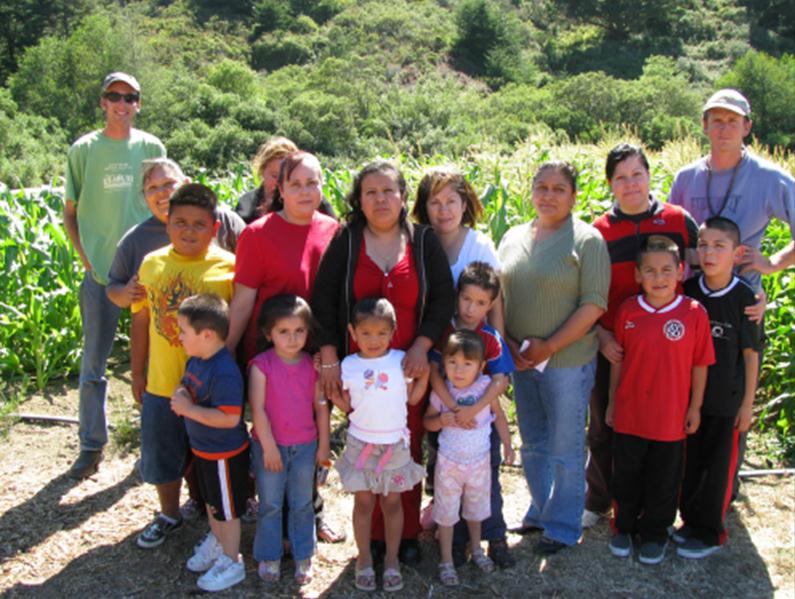
Blue House

“I’ve really enjoyed working with Puente at the farmer’s market. I hope it continues,” he says.

Both Potrero Nuevo and Blue House Farm will be honored for their contributions to Puente and the South Coast communities at Puente’s annual volunteer appreciation event, to be held on October 21.
Mural carries message

 Art serves purpose beyond purely aesthetic

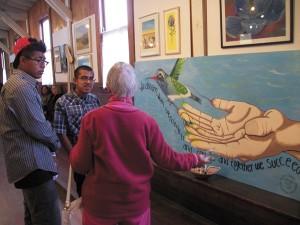
From left, Fernando Macias and artist Jovany Rios discuss Rios’ poster with a visitor to the South Coast Artists’ Alliance art show Friday night in Pescadero, where Rios’ poster was unveiled. (Stacy Trevenon)

In an unexpected turn of events, graffiti scrawled under a Pescadero bridge evolved into a mural with a positive, hopeful message for the Pescadero community.

That mural shows a pair of extended hands from which a hummingbird is springing into flight. In a lower corner below the bird is a lighthouse on a rocky shore. Angled around the bird and the hands is the phrase, “We dream with strength and courage and together we succeed.”

The mural drew attention when it was featured in the South Coast Artists Alliance Art Show on Friday. The show, a reception featuring 44 SCAA artists from as far south as Davenport and as far east as Skyline Boulevard, kicked off the Pescadero Art and Fun Festival and drew scores of Bay Area art lovers.

On Friday, its creator, Pescadero resident and lifelong art lover Jovany Rios, 18, chatted with friends including fellow Pescadero residents Margaret Sedillo and Fernando Macias, 17, both members of the South Coast Prevention Partnership. That group’s goals for a positive, healthy South Coast had a direct bearing on the mural.

“It represents the beginning of a more healthy and informed community dialogue” around addressing alcohol and drug abuse, said Puente de la Costa Sur Director of Prevention Services Jorge Guzman.

It all began when local teens went to Sedillo, upset about graffiti they’d seen on the underside of a Pescadero bridge. She went to the bridge to see it and understand their concerns. “They felt it was negative and could be replaced with something more positive,” she said.

As part of her outreach work, she brought the youth into discussions with SCPP and its youth and adults from all walks of life from Pescadero, La Honda, Loma Mar and San Gregorio. The youth were asked for ideas of how to promote a more positive message, and Rios came up with several sketches. The SCPP gave him the phrase to be put in the design.

The hands in the design signify the Pescadero community, said Rios, and the bird signifies the lessons and potentials that come from it.

In time, partnership organizers say, the mural will be mounted outside in the heart of the town. It represents the first part of the SCPP’s effort of promoting a safe and healthy community. The second part, said Sedillo, involves parent outreach and addressing the graffiti by removing it or replacing it with something more positive.

“It’s making the community a better place,” said Macias. “We’re trying to represent that with the mural — a better community for our younger residents.”

Part of that process, said Guzman, involved visible, responsible handling of alcoholic beverages while enforcing prevention of underage drinking. At Friday’s reception, Guzman said, IDs were checked and armbands went to those who were of age.

While this was happening, art lovers thronged the I.D.E.S. Hall Friday evening, threading their way around display boards covered with paintings or photographs, tables displaying woodwork or other three-dimensional art.

The art was “fresh, exhilarating, and well-done,” said painter Rebecca Holland, who was displaying new works focused on barns and horses.

“It’s fantastic,” said Mark Velligan of Pescadero. “So much of it is local, really amazing.”

“There’s a lot of good artists in this area,” said photographer David Wong, who was exhibiting in the festival for the fifth year.

The art exhibit was due to run throughout the festival weekend.


Article from The Half Moon Bay Review. Printed August 22, 2012 and posted online August 23, 2012.

Justice for farm worker families in labor housing case

Seven plaintiffs are sharing $115,000 in damages awarded in a court-ordered settlement with Red Marchi & Sons, a Pescadero farming family that subjected tenants to dangerously unsafe housing conditions.

“It sends a very strong message that property owners have a responsibility to keep their tenants safe – and if they don’t do it people will speak out, and that there’s a remedy,” says Kerry Lobel, Executive Director of Puente.

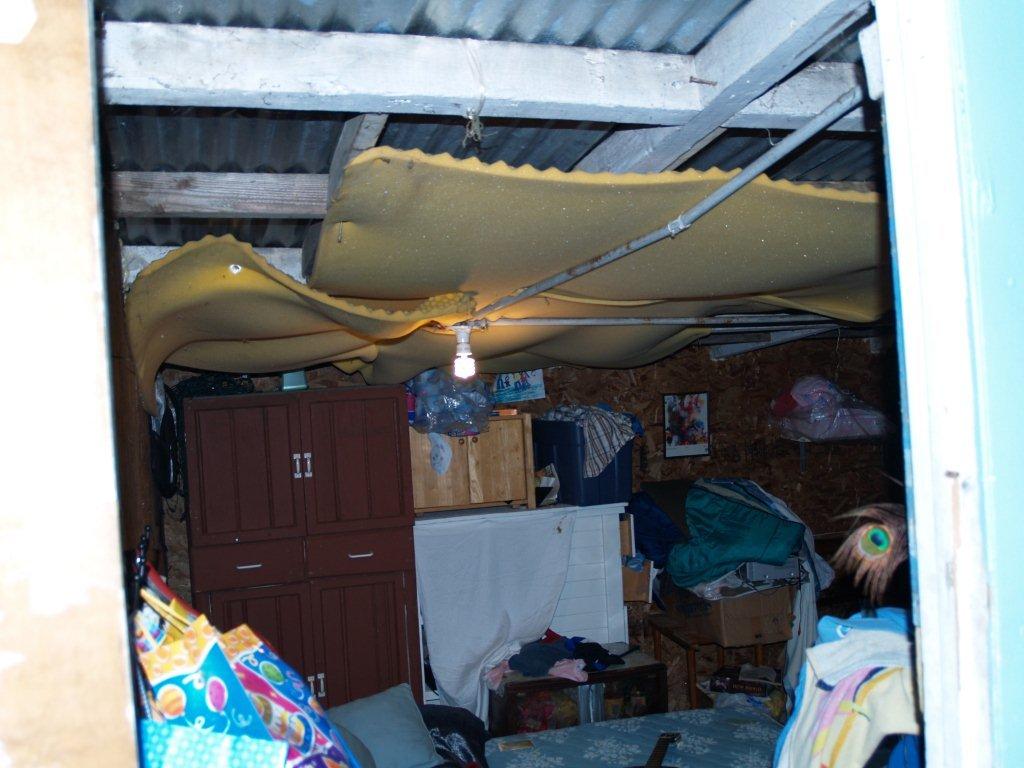
Dow House Garage, with exposed light bulb and foam mattress to catch rain water (Photo by Lisel Holdenried/CRLA)

The San Mateo County Superior Court awarded the settlement in April 2012 to four adults and two children. The plaintiffs all used to live at a Marchi-owned labor-housing site on Bean Hollow Road in Pescadero, but they had to move when the housing grew intolerable. One family received an extra $10,000 when the court determined that Marchi had evicted them as an act of retribution.

The squalid housing – leaky ceilings, bugs and slugs creeping in through holes in the floor, overcrowded rooms, exposed light bulbs and other fire hazards – came to light in 2010 when it emerged that Marchi’s tenants were drinking water polluted with nitrates.

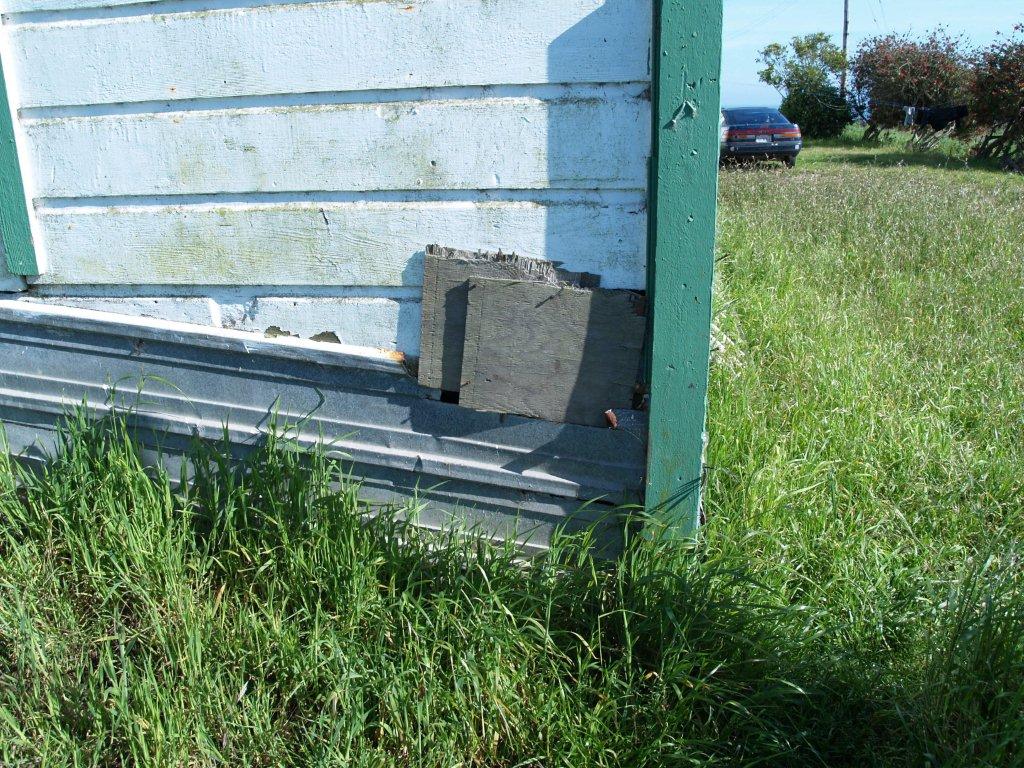
Outside of Dow House, boards to cover holes

Only a few tenants had the courage to speak out about their overall housing conditions. Lisel Holdenried, an attorney with California Rural Legal Assistance, Inc., took on their case for free.

“Nobody wanted to complain because there’s no place to move to. There’s no other place to live,” says Holdenried.

Marchi resolved his housing issues, but the lack of decent, affordable housing for South Coast farm and nursery workers is still a serious problem. Puente has been working with the county to try to get loans for local farmers to rehabilitate buildings to make them more livable, and is trying to see whether other nonprofits might also step in to help.

From the earliest days, Puente let people know they would find help to move if they needed to. Puente has been a resource to help people understand their rights under the law.

“We’re really clear, working with farmers, what their responsibilities are. We’re clear in working with farm workers, what their rights are,” says Lobel.